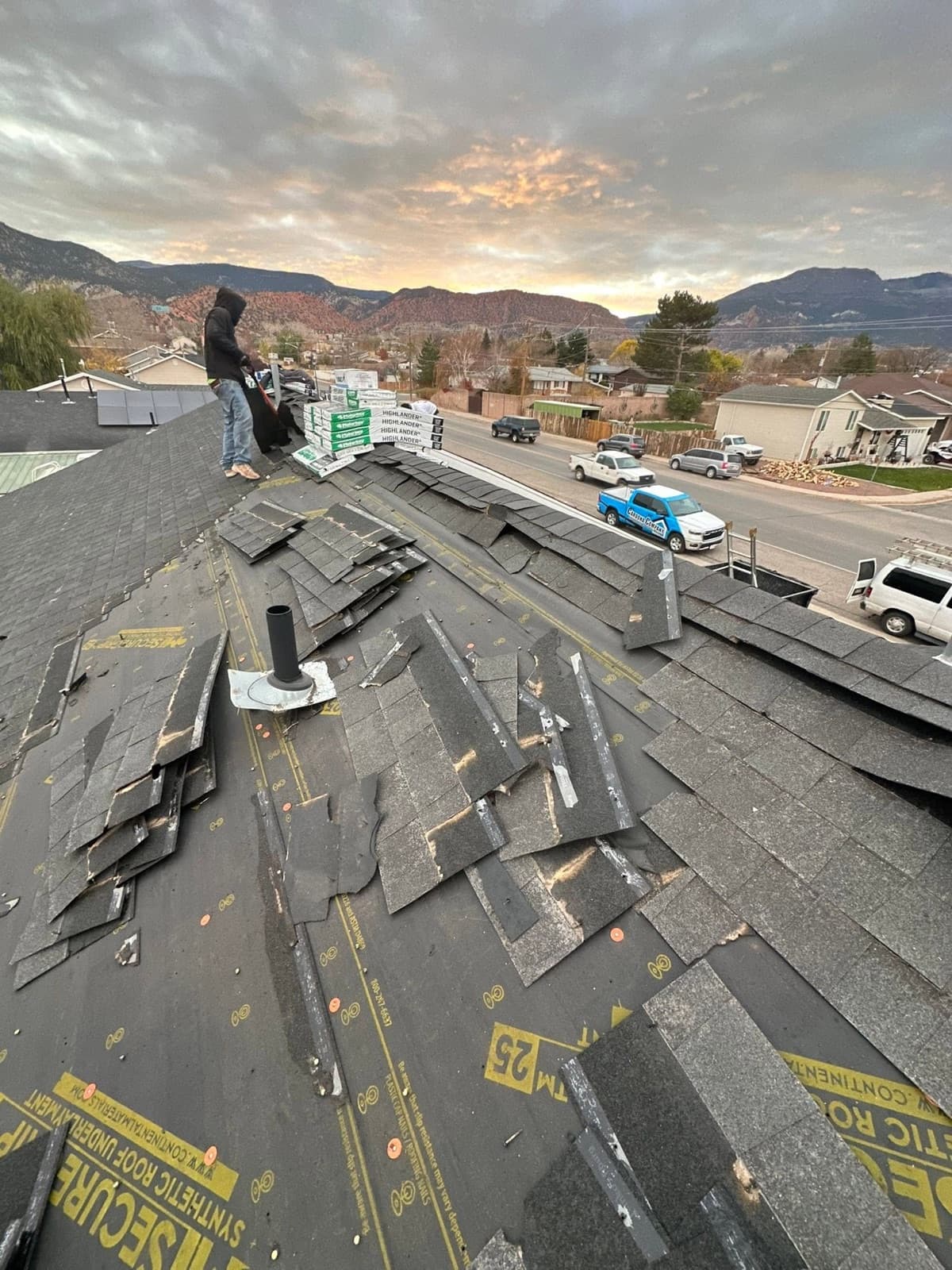
Roofer documenting hail and wind damage on a residential roof for an insurance claim

Service

Storm Damage Restoration

When hail, wind, or heavy snow hits your roof, time matters. We respond fast, stop further damage, document everything for your insurance, and rebuild your roof correctly.

Overview

Emergency Ready

Storm damage isn't always obvious from the ground. A bad hailstorm can bruise an asphalt roof in a way that doesn't leak today but will fail in two or three years — and by then, your insurance window may have closed. Wind can lift shingles just enough to break their seal without throwing them off the roof. Snow and ice loads stress fasteners and flashings in ways you only see once water starts coming in.

Cardona Company LLC has been responding to storm damage in Utah and Nebraska for more than 20 years. We come out, inspect every slope of your roof, take photographs of every damage point, and give you a written report you can hand to your insurance adjuster. We've seen what claims get approved and what gets pushed back, and we document accordingly.

If water is coming into your home right now, call us — we provide emergency tarping to stop the damage from getting worse while we work out the permanent repair or replacement plan. Once the claim is settled, we do the actual work using the materials your policy specifies and our standard installation methods.

What's Included

Every storm damage job, done the same way.

  • 24/7 emergency response and emergency tarping when water is actively entering
  • Full slope-by-slope damage inspection with photographic documentation
  • Written damage report formatted for insurance claims
  • Cooperation with your insurance adjuster on-site when scheduling allows
  • Full repair or replacement scope of work matched to your policy
  • Hail, wind, snow load, and fallen-branch damage all covered
  • Permitting and inspection coordination where required
  • Standard installation methods and warranties on all rebuild work

Materials & Options

Real choices, explained honestly.

Tarping Materials

Heavy-duty poly tarps and battens rated for emergency use. The goal is to stop the damage immediately, not to look pretty — permanent materials come once the claim is finalized.

Like-Kind-and-Quality Replacements

When your insurance policy specifies replacement of damaged materials, we install like-kind-and-quality products — typically the same type and grade of shingle, the same flashing details, and the same ventilation system you had before.

Upgraded Options

If you want to upgrade beyond what your policy covers (e.g., from 3-tab to architectural shingles, or to impact-resistant shingles that may earn an insurance discount), we can build that into the scope and clearly mark what's covered vs. out-of-pocket.

Typical Timeline

What to expect, step by step.

01

Hour 0 — Emergency Response

If water is coming into your home, call us. We try to dispatch within hours when our crew is available, install an emergency tarp, and stop the active damage.

02

Days 1–3 — Inspection & Documentation

Full roof inspection with photographs of every damage point. You receive a written damage report formatted for insurance.

03

Insurance Claim

You file the claim with your insurer. We coordinate with the adjuster, attend the inspection when scheduling allows, and provide additional documentation as needed.

04

Repair or Replacement

Once the claim is settled and scope is agreed, we order materials and schedule the work. Most storm-related rebuilds are completed in 1–4 days depending on the scope.

What Affects the Price

No fake numbers — real factors.

Every roof is different. Rather than publish made-up prices, here are the things that actually move the cost up or down. We give you a real number after we've seen your roof.

  • Whether you're filing an insurance claim (most storm work is insurance-paid)
  • Your policy's deductible and coverage limits
  • Whether the policy covers full replacement or actual cash value (depreciated)
  • Scope of damage — partial slope vs. full roof replacement
  • Any upgrades you choose beyond like-kind-and-quality
  • Permit requirements in your jurisdiction

Warranty

Backed in writing.

All rebuild work carries our standard written workmanship warranty plus the manufacturer warranty on the materials installed. Emergency tarping is short-term protection, not a warranted permanent repair.

Local Context

In Utah, the most common storm claims we see are wind damage along ridges and high-elevation snow load damage at eaves and valleys. Around Columbus, hail damage is the dominant claim type — Nebraska sits in one of the most hail-prone regions in the country, and most asphalt roofs in the area will see at least one significant hail event in their lifetime. Knowing what damage looks like in each environment makes a real difference in how thoroughly we document a claim.

FAQ

Storm Damage questions, answered.

Do I need to file a claim before I call you?

No — call us first. We can inspect the damage, tell you whether a claim is worth filing, and document everything before you talk to your insurer. If the damage is below your deductible, you may not want to file at all.

Do you provide emergency tarping?

Yes. If water is actively entering your home, we offer 24/7 emergency tarping when our crew is available. The tarp stops the damage from getting worse while we work out the permanent repair plan.

Will you work directly with my insurance company?

We cooperate fully with your insurance adjuster — meeting them on-site when scheduling allows, providing photographs and a written damage report, and answering scope questions. We don't act as a public adjuster or negotiate the claim on your behalf, but we make sure your roof's condition is accurately documented.

How long do I have to file a hail or wind claim?

Most insurance policies have a deadline (commonly one year from the date of loss, but it varies by carrier and state). If you suspect storm damage, get an inspection sooner rather than later — even if the roof isn't leaking yet.

Can hail damage be invisible?

Yes. Hail can bruise asphalt shingles in ways that don't leak right away but shorten the roof's lifespan significantly. That's why a trained roofer's inspection — not just a glance from the ground — matters after a major hail event.

Do you do storm chasing or pop-up out-of-state work?

No. We are a local company headquartered in Cedar City, Utah with crews serving Cedar City and a 100-mile radius around Columbus, Nebraska. We're here before the storm and we're here after.

Need Help Right Now?

Call us — free estimates, fast response.